Ever notice how just one bad day can feel like it tips everything out of balance? Picture your brain buzzing, your chest tight — and your to-do list only gets longer. Suddenly, you can’t remember the last time you really took a breath.
Stress isn’t just an occasional visitor for most of us — it’s more like a persistent neighbor who shows up when you least need them. When pressure piles up, basic self care slips away. You skip meals, sleep badly, and forget what joy even feels like. It’s easy to believe you’ll get back to yourself “someday,” but someday rarely comes without a plan.
By the end of this read, you’ll have a personal guide for self care during stressful times that suits your real life — not just a pretty checklist. Expect small steps, genuine relief, and—finally—the kind of calm that actually lasts. Ready to feel grounded?
Recognizing The Early Signs Of Stress Overload
How do you actually know when stress is creeping up — before it hits full force? Most of us brush off the warning signs. It’s not just feeling irritable once or missing a night of sleep. The truth is: stress often starts whispering through your body and mind long before you recognize it. Catching those signals early can change everything.
Picture this scenario: It’s midweek, you wake up already tired, your jaw aches from clenching at night, and even small decisions leave you feeling overwhelmed. Maybe your appetite’s off or you’re forgetting names you’d usually recall in a flash. These aren’t just random bad habits — they’re classic signals of stress overload.
How Stress Manifests: Mental, Physical & Emotional Cues
- Physical: Headaches, stomach upsets, sore shoulders, tension in your jaw, shallow breathing
- Mental: Racing thoughts, trouble focusing, forgetfulness, spiraling worries
- Emotional: Quick to anger, tearfulness, irritability, feeling hopeless or numb
💡 Pro Tip: The American Psychological Association recommends keeping a quick daily log of symptoms to spot patterns before they escalate. It’s a simple step, but most people skip it—until a bigger issue appears.
In practice: Imagine you’re working from home. You push through headaches, snack on whatever’s within reach, barely move. By Friday, you’re snapping at loved ones and sleeping poorly. That “normal” routine? It’s actually a cycle of stress overload, repeated week after week, unless you break it with awareness.
| Sign | Typical Overlooked Example | Risk If Ignored |
|---|---|---|
| Physical | Neck tension every afternoon | May evolve into migraines or insomnia |
| Mental | Forgetting meetings or misplacing items | Reduced productivity, chronic anxiety |
| Emotional | Feeling “on edge” without cause | Relationship strain, burnout |
It’s worth noting: Johns Hopkins Medicine highlights that early stress intervention lowers risk for long-term issues like hypertension or depression. If signs keep growing, consider reaching out to a licensed mental health professional—just one session can offer tools you might not expect.
But there’s one detail most people completely overlook until it’s too late…
Why Self Care Isn’t Selfish When The World Feels Heavy
Ever find yourself feeling guilty for taking a break when your phone keeps buzzing and the world seems chaotic? You’re not alone — a lot of us believe self care is a luxury, or even a selfish act, especially when responsibilities pile up. Here’s the thing: neglecting your well-being helps exactly no one. The World Health Organization emphasizes that self care enhances your resilience, which means you’re actually better positioned to support others and handle challenges when you tend to your own needs first.
- Boundaries Matter: Saying “no” doesn’t make you a bad friend or parent; it preserves your energy for what truly matters.
- Rest Fuels Productivity: Quality downtime isn’t wasted time — Harvard Medical School notes it’s crucial for memory, focus, and mood regulation.
- Stress Management Isn’t Self-Indulgence: Practicing self care techniques, from guided breathing to journaling, reduces cortisol — the primary stress hormone — so you actually recover instead of just powering through on autopilot.
💡 Pro Tip: When you feel selfish about taking time for yourself, flip the script: ask, “Would I judge someone else for needing a break?” If not, give yourself the same grace.
In practice: Imagine you’re juggling work deadlines while caring for family. You skip meals, push through exhaustion, ignore your own signals. By the weekend, you snap at your kids for tiny things and feel guilty right away. Now, what if you’d paused midweek for a 15-minute walk or set boundaries on after-hours emails? Chances are, you’d have more patience and less burnout. Regular self care ripples outward — making your relationships, work, and even your mood stronger.
| Myth | Reality | Why It Matters |
|---|---|---|
| Self care steals time from others | Replenishes your mental energy | Improves your ability to be present |
| Treats are just escapism | Healthy breaks restore focus | Enhances effectiveness and decision making |
| Rest is laziness | Rest boosts resilience | Lowers risk of chronic illness |
And this is exactly where most people make the most common mistake…
Simple Grounding Techniques You Can Start Today
Ever wonder why some people stay incredibly calm during chaos? The answer often lies in simple grounding techniques—a set of science-backed tools that quickly reset your mind and body. It’s not about having hours to meditate or fancy equipment; it’s about having the right method ready at your fingertips.
- 5-4-3-2-1 Sensory Check-In: Name 5 things you can see, 4 you can touch, 3 you can hear, 2 you can smell, and 1 you can taste. This interrupts racing thoughts and brings you into the present within two minutes.
- Box Breathing: Inhale slowly for 4 seconds, hold for 4, exhale for 4, then pause for 4. Repeat this simple cycle as needed — Navy SEALs use it to stabilize nerves on tough missions.
- Ground-to-Earth: Stand barefoot on grass, wood, or stone for five minutes. Touching earth elements helps stabilize your nervous system, according to the Cleveland Clinic.
- Pocket Object: Carry a smooth stone, stress ball, or soft keychain. When stress surges, close your hand around it—let the focus on texture and temperature pull you out of your anxious loop.
- Guided Reset: Listen to a two-minute grounding meditation (tons are free on Insight Timer or Calm) and simply follow along. Audio cues strengthen your relaxation response.
- Total Time Needed: 2–10 minutes
- Items: None required (a stone or audio app optional)
💡 Pro Tip: Try pairing box breathing with a scent, like lavender lotion or a dab of essential oil. Sensory stacking—engaging two senses at once—boosts the calming effect, according to research published by the National Institutes of Health.
In practice: Picture this scenario. You’re overwhelmed at work, shoulders tight, your mind racing ahead. You pause, touch the smooth pebble in your pocket, and take three focused breaths. Instead of spiraling, you’re back in your own skin within minutes. That’s the power of having tools ready—no need to wait for self care to feel like a spa day.
What actually works might surprise you…
Choosing Self Care Tools That Actually Work For You
With all the self care products and solutions out there, how do you separate what works from all the hype? Here’s the truth: there’s no universal ‘best’—what actually helps is highly personal. The goal is to choose self care tools that fit your routines, personality, and stress patterns, instead of just trying whatever’s trending on social media.
Picture this scenario: You see an ad for a fancy meditation app. Your friend swears by a weighted blanket. Meanwhile, your sibling loves coloring books. You try one after another, but nothing sticks—what’s the missing piece?
| Tool Type | Best For | Potential Limitations |
|---|---|---|
| Guided Meditation Apps (e.g., Calm, Headspace) |
People needing structured, on-demand relief | Subscription costs; not engaging for everyone |
| Weighted Blankets | Sleep trouble, nighttime anxiety | Not portable; warm climates |
| Journals & Coloring Books | Mindful, creative processing | Takes dedicated time, may feel childish to some |
- Energy Level: Think honestly about when you’re most drained. Do you need quiet rest or physical movement?
- Budget: Big-ticket products aren’t always better. Many people find free tools—like body scans or breathing exercises—work just as well as pricey devices.
- Personality Match: Are you a social refueler or a solo recharger? Don’t force group activities if alone time helps more.
💡 Pro Tip: According to the Mayo Clinic, consistency beats novelty every time. Instead of chasing the next trending product, pick one manageable tool and commit for at least a week. Track your mood and energy shifts before switching to something else.
In practice: Let’s say you try a 10-minute journaling session every night for a week—it feels grounding and improves your sleep. Or you test a simple habit tracker and notice your tension eases after yoga. Only by experimenting, reflecting, and repeating will you discover the tools that genuinely help you stay grounded.
And this is exactly where most people make the most common mistake…
Creating Micro-Rituals To Make Calm A Daily Habit
How do you make calm stick—especially when heavy stress keeps wrecking your best intentions? The truth is, the key isn’t forcing marathon routines or waiting for a weekend retreat. It’s the everyday micro-ritual: short, repeated actions that ground you right where you are.
These aren’t major life overhauls. Micro-rituals fit into tight schedules and unpredictable days, giving you reliable pockets of peace. According to the University of California, Irvine, consistent rituals can actually change how your brain handles stress—making calm more automatic over time.
- Pick one moment that repeats daily (waking up, afternoon coffee, bedtime).
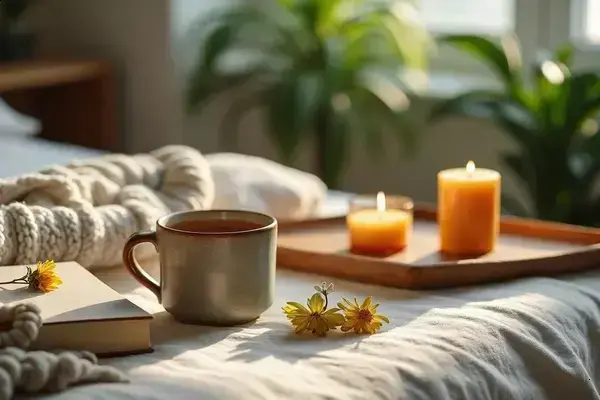
- Name one small grounding action—two minutes or less. Think lighting a candle, stretching, or slow breathing before opening your laptop.
- Set a trigger—a cue that reminds you, like placing the candle by your mug or leaving a post-it on your nightstand.
- Do your ritual at the same time, in the same spot, for one week straight. Don’t skip, even if you can only manage thirty seconds.
- Reflect at week’s end: Does that moment feel calmer, more predictable, or more meaningful?
- Items: A sensory object (candle, stone, mug), timer, post-its, a journal (optional).
- Time: 2 minutes per ritual, once or twice daily.
💡 Pro Tip: If you fall off-track, skip the guilt trip. The Calm Clinic suggests resetting by adding a new sensory element—switch music genres, swap in a fresh scent, or change location—to keep the routine engaging and effective.
In practice: Every night, you light a small soy candle, jot one gratitude in your notebook, and take three deep breaths. The kids, the dog, the news—they’ll all wait for sixty seconds. Over time, your mind starts to anticipate that pause, craving it, relying on it. That’s how calm becomes not just a rare treat, but part of your daily identity.
The right habits in place now make everything easier from here.
Your Calm Is Within Reach
If you take just one thing from this guide, let it be: true self care during stressful times isn’t selfish or complicated — it’s about small, real actions that keep you grounded in the chaos. You learned how to spot stress early, why self care matters, which grounding methods fit real life, and how micro-rituals create steady calm. The main keyword here is sticking with what truly supports you — not what looks good online.
Before, maybe your days felt rushed and your mind never slowed down, no matter what you tried. Now you know how to press pause for even two minutes, choose the right tools for your needs, and make calm a habit — not a rare accident. Real change starts with the tiniest steps and honest attention to your own needs. You can do this.
Which grounding technique or micro-ritual are you most excited to try first? Share your favorite or ask for advice in the comments — your story might help someone else breathe easier too.
Hannah Joy Donovan is a self care advocate and mental wellness writer dedicated to helping busy people build daily habits that restore energy, reduce stress, and create genuine joy. With a passion for mindfulness, journaling, and practical wellness routines, Hannah built this blog to give everyone the honest, warm, and practical tools they need to truly take care of themselves.